
Power & Distribution / TECHNICAL STUDY
Power Distribution & Panel Fabrication
A workshop portfolio of power-panel assembly, large-breaker distribution and internal control wiring.
01 / APPLICATION CONTEXT
What the equipment shows.
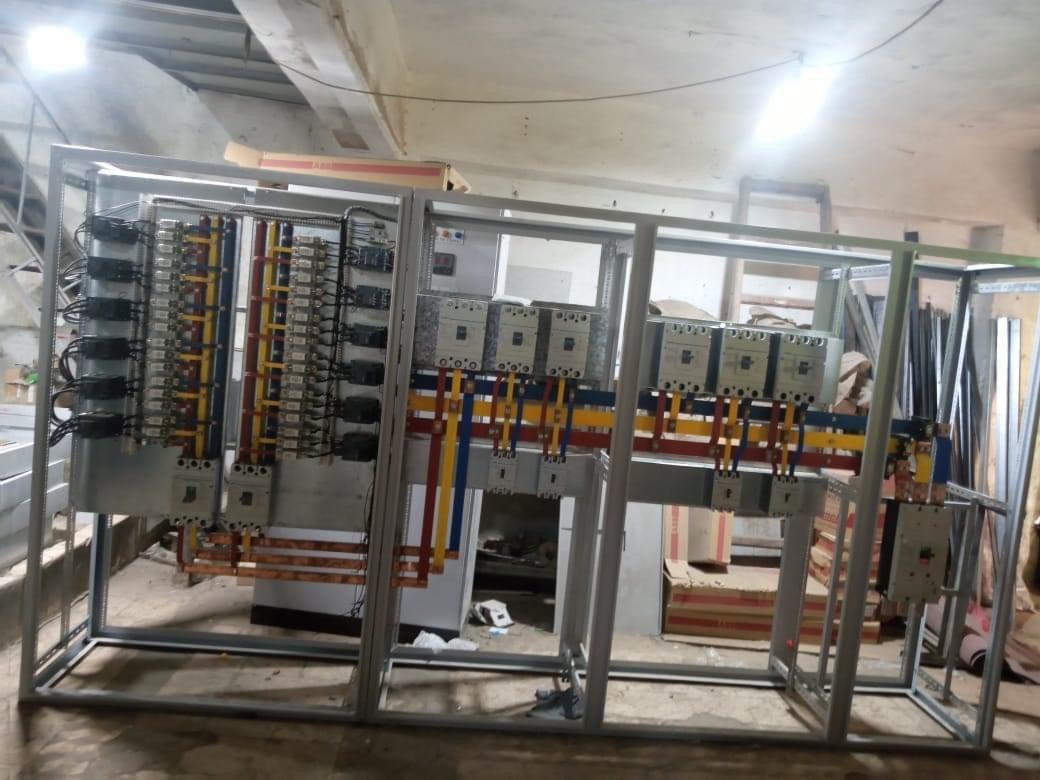
Power panels connect incoming supplies to protected outgoing circuits. Their integration starts with the load list, source arrangement and installation constraints—not cabinet appearance alone. These photographs document different assembly views and cabinet examples.
02 / VISIBLE TECHNICAL FEATURES
Control, protection and operator interfaces.
- Breakers and colour-coded busbars
- Internal electrical distribution
- Control wiring and door-mounted interfaces
03 / ENGINEERING REVIEW
What to verify on a similar installation.
- Confirm the single-line diagram and breaker/source arrangement
- Review circuit protection, conductor identification and earthing
- Inspect terminations and perform agreed insulation and functional checks
These are proposed review points for a future assessment—not claims that the photographed installation passed those tests.
Documented scope
The original company photographs establish the visible equipment only. Final ratings, connected loads, vessel details and acceptance records require the project drawings and site review.
ADDITIONAL VIEWS / SAME STUDY
The details behind the interface.
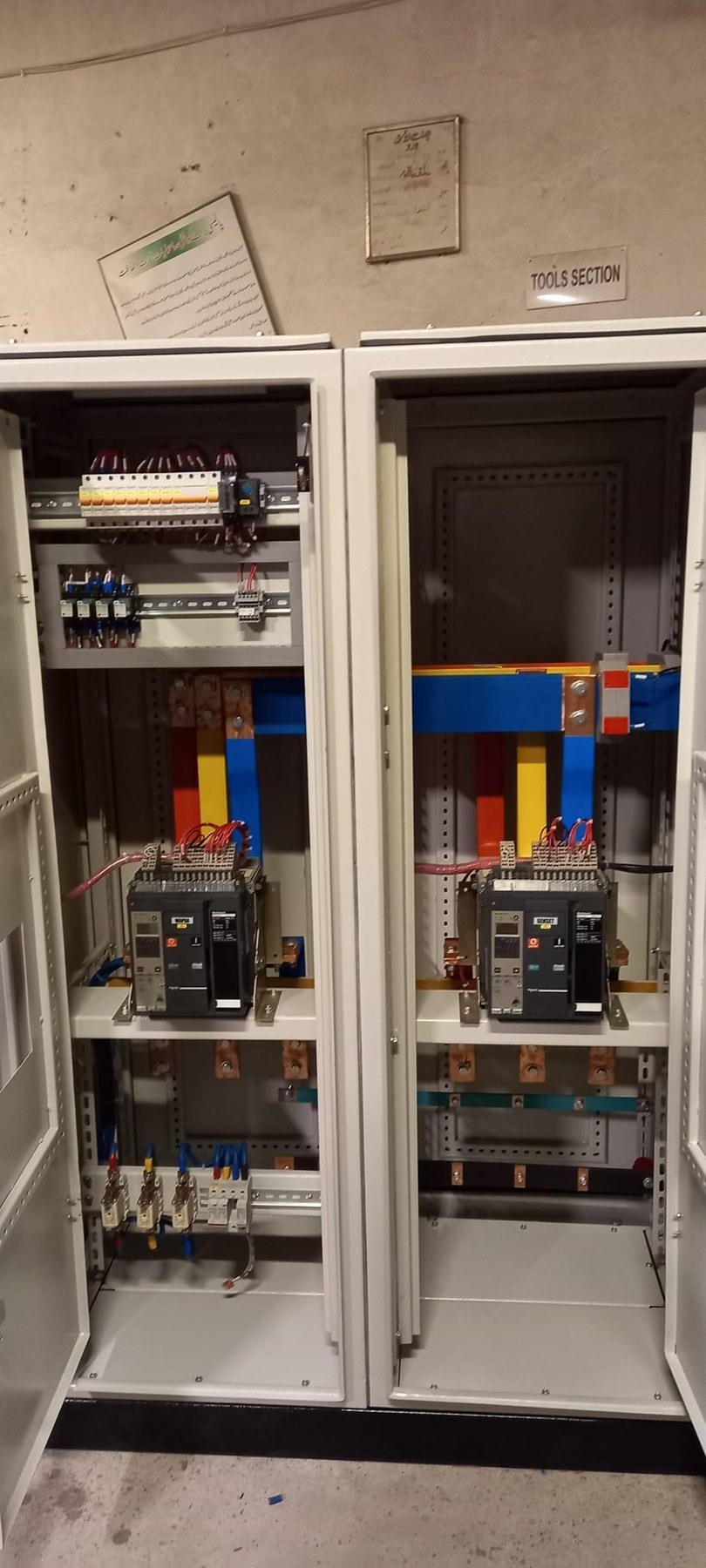
Power distribution with large breakers
Two large power breakers in separate compartments, connected to colour-coded busbars with auxiliary control circuits. The source arrangement cannot be established from this photograph alone.
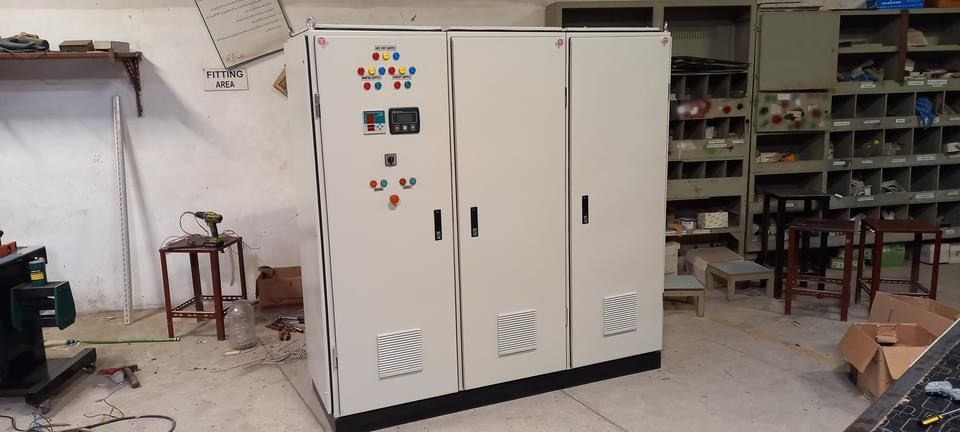
Workshop-assembled electrical cabinet
A multi-door floor-standing cabinet prepared in the workshop, with front-mounted controls and indicators. Its specific application requires a drawing or project identification.
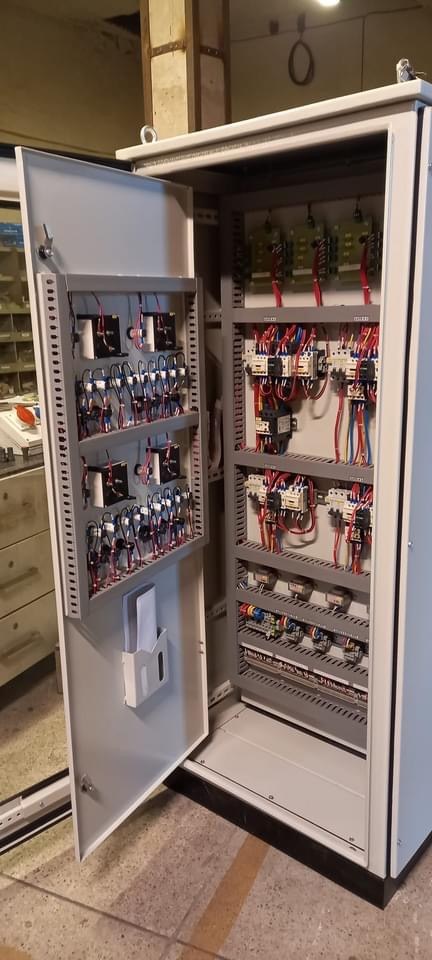
Internal wiring and operator controls
An internal view showing control components, door-mounted control wiring and cable ducts linking the operator interface to the cabinet equipment.
Planning similar work?
Send the equipment model, available drawings, vessel/site location and required scope. We will review the electrical and control interfaces before defining a quotation.